
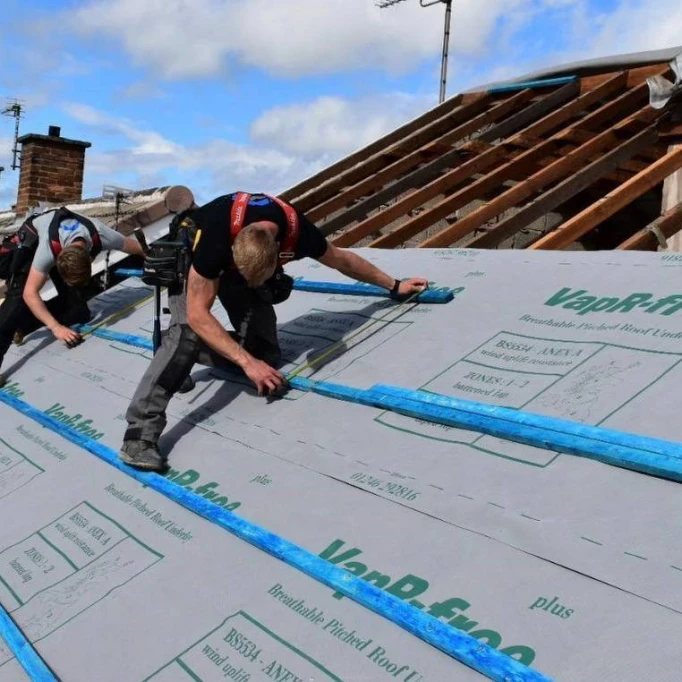
When building or renovating a roof, the greatest attention is often paid to the roof covering itself. However, the layers that are not visible under the roof covering are equally important. One of them is the diffusion membrane, which helps protect the roof structure, thermal insulation and wooden elements from moisture.
What exactly is a diffusion membrane used for, where is it installed and why is it also important under a metal roof?
What is a diffusion membrane?
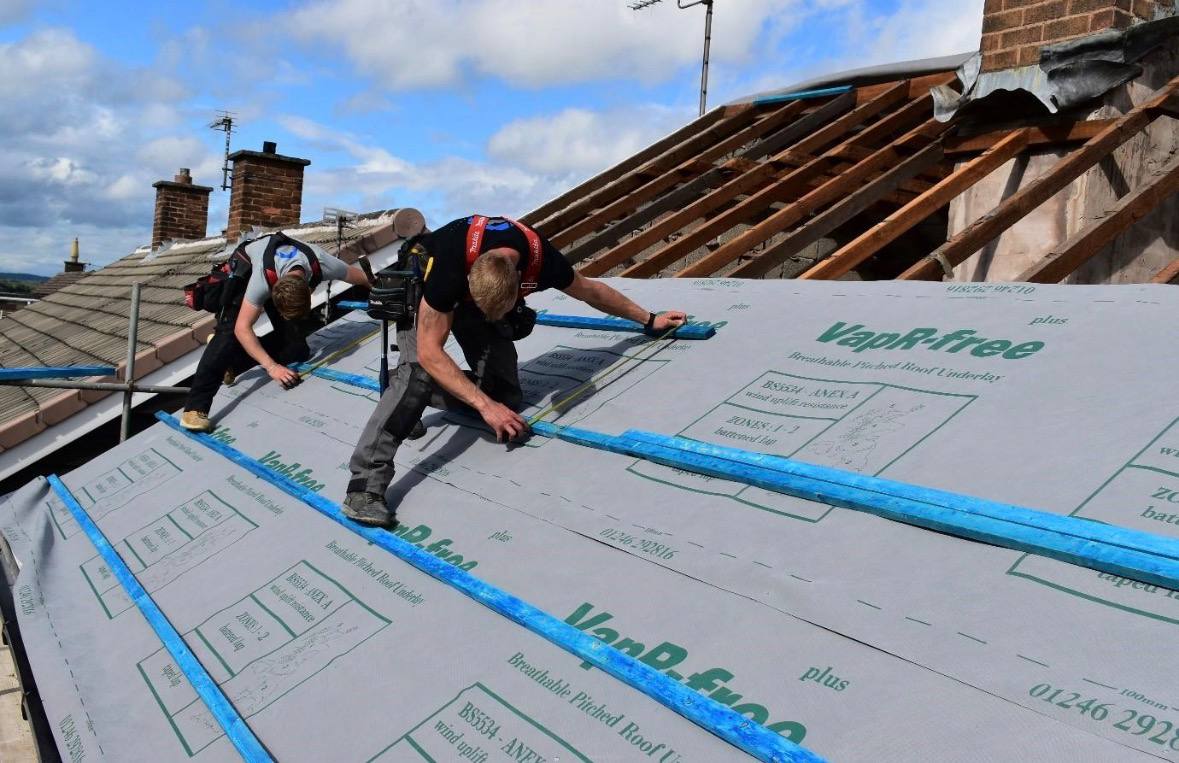
A diffusion or vapour-permeable membrane is a special roofing membrane that is installed under the roof covering.
Its main purpose is to combine two important properties:
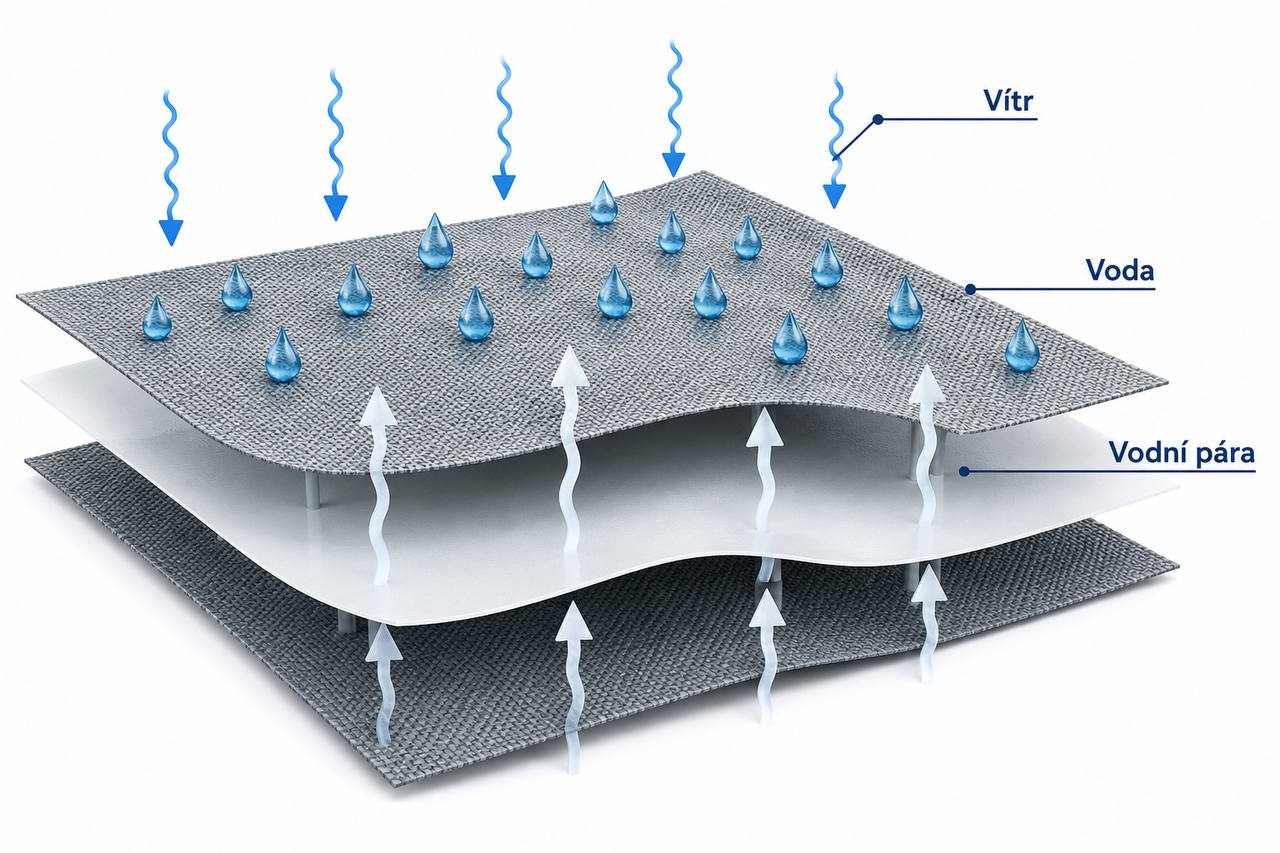
to allow water vapour to escape from the structure to the outside,
to protect the structure from water, snow, dust and other moisture coming from outside.
The membrane therefore helps keep the roof structure and thermal insulation dry.
Modern highly diffusion-open membranes have a very low Sd value, allowing water vapour to pass easily out of the structure.
Why does moisture appear in the roof?
Water vapour is produced in every normally used house – when cooking, showering, washing, drying clothes or simply by people living in the interior.
Some of this moisture can enter the roof structure.
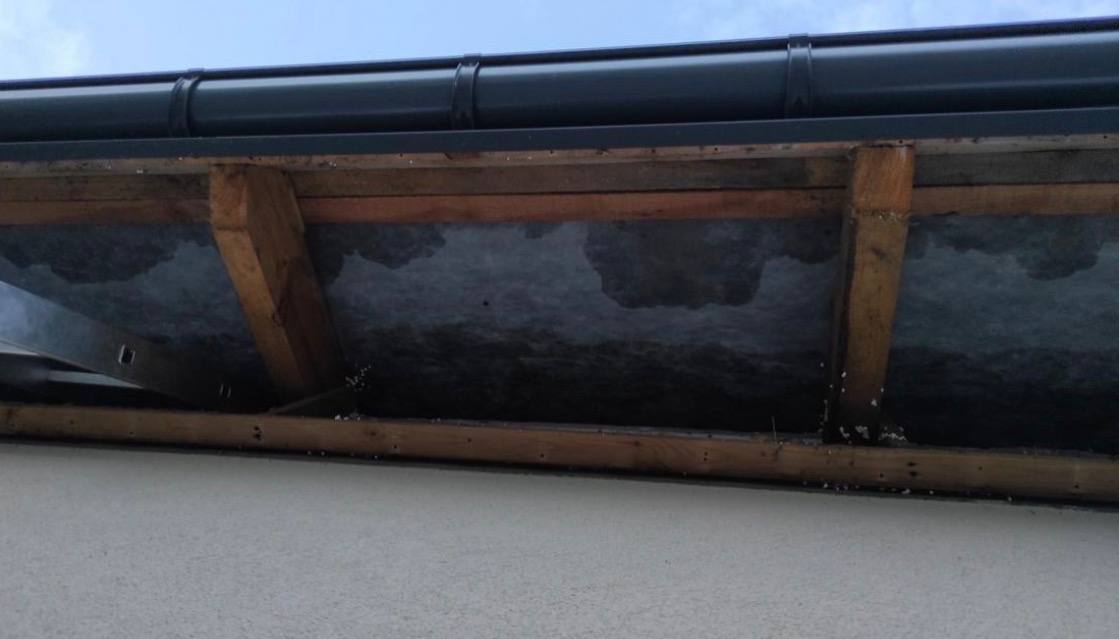
If it cannot escape safely, condensation can occur. Long-term moisture can subsequently cause:
reduced efficiency of thermal insulation,
mould growth,
dampening of wooden structures,
damage to the roof structure,
reduced lifespan of the entire roof.
A correctly designed roof structure must therefore allow moisture to escape safely.
A diffusion membrane has several functions in the roof structure at the same time.
1. It allows water vapour to escape from the structure
One of the most important properties of the membrane is its high vapour permeability.
Water vapour that enters the roof structure can pass through the membrane towards the outside. This significantly reduces the risk of moisture accumulating inside the roof structure.
2. It protects the thermal insulation
Thermal insulation works properly primarily when it remains dry.
The diffusion membrane creates a protective layer above the insulation and helps protect it from moisture that could get under the roof covering.
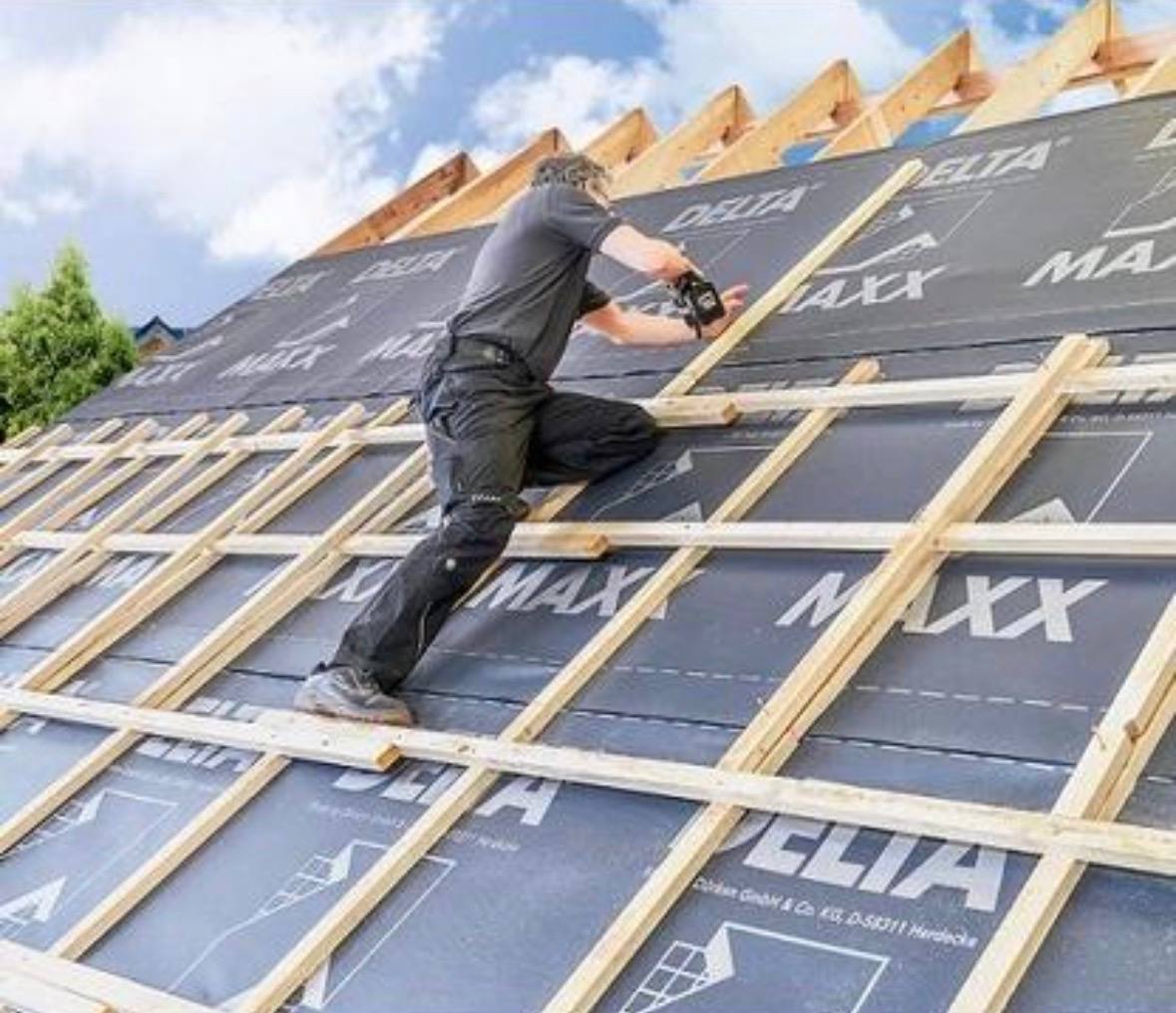
3. It works as secondary waterproofing
The roof covering provides the main protection of the house against rain and snow. Nevertheless, under certain conditions, a small amount of water or snow can get under the roof covering.
This can include, for example:
wind-driven rain,
wind-blown snow,
condensation,
water penetrating during extreme weather conditions.
The diffusion membrane works here as a second protective layer – secondary waterproofing.
It catches the water and, when properly installed, safely directs it towards the gutter.
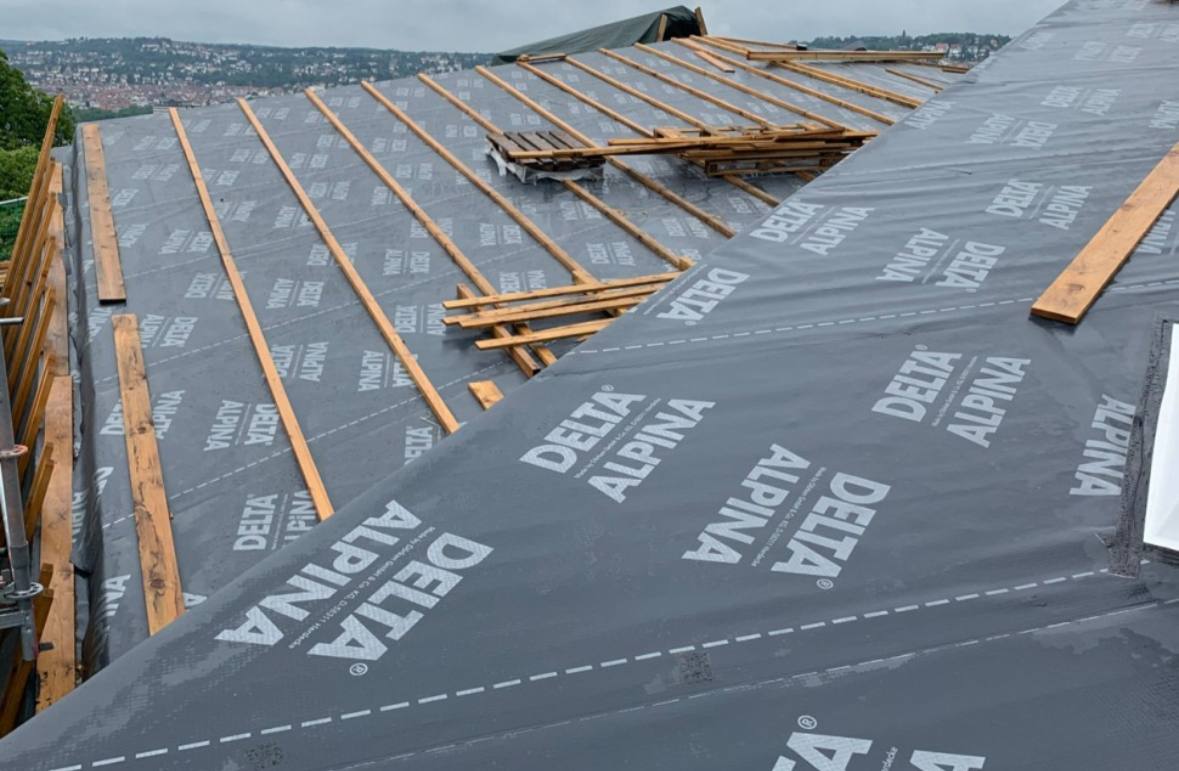
Diffusion membrane under a metal roof
With metal roofs, a correctly designed roof structure is extremely important.
Metal reacts quickly to changes in outdoor temperature and, under certain conditions, condensation can form on its underside.
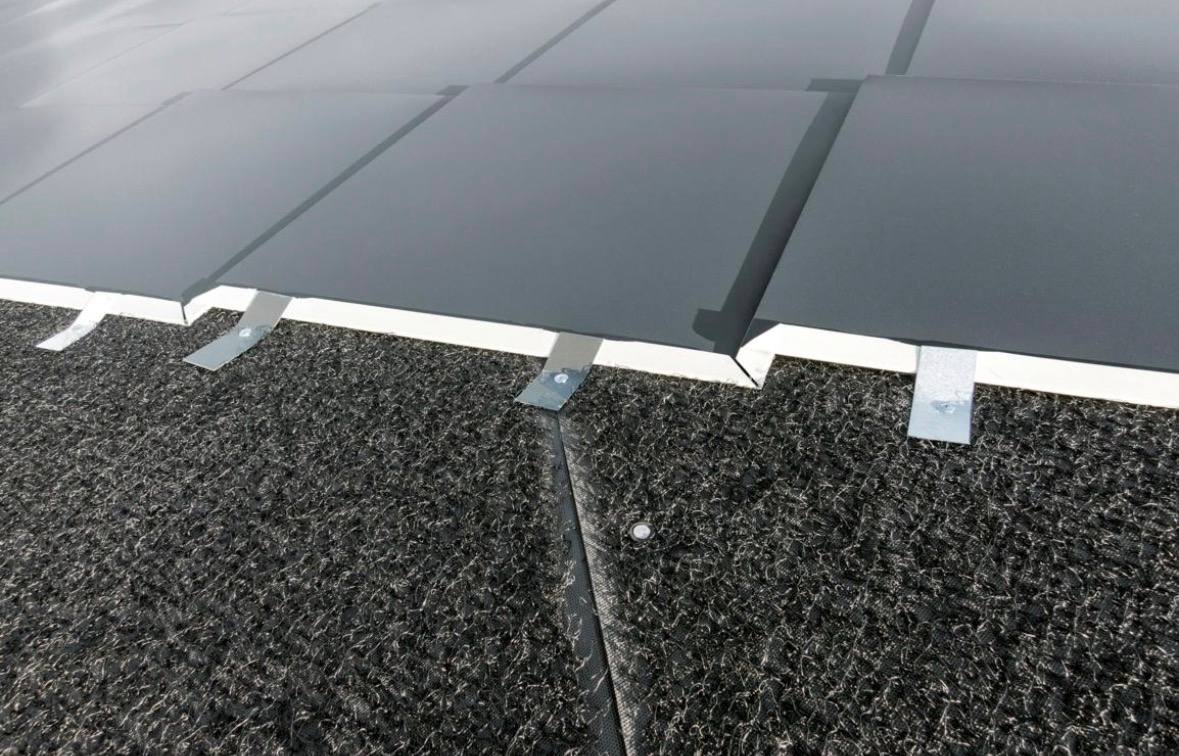
Therefore, it is necessary to consider not only the roof covering itself, but the entire roofing system – the diffusion membrane, ventilation gap, counter-battens and, where necessary, a separation and drainage layer depending on the specific type of metal roofing and roof structure.
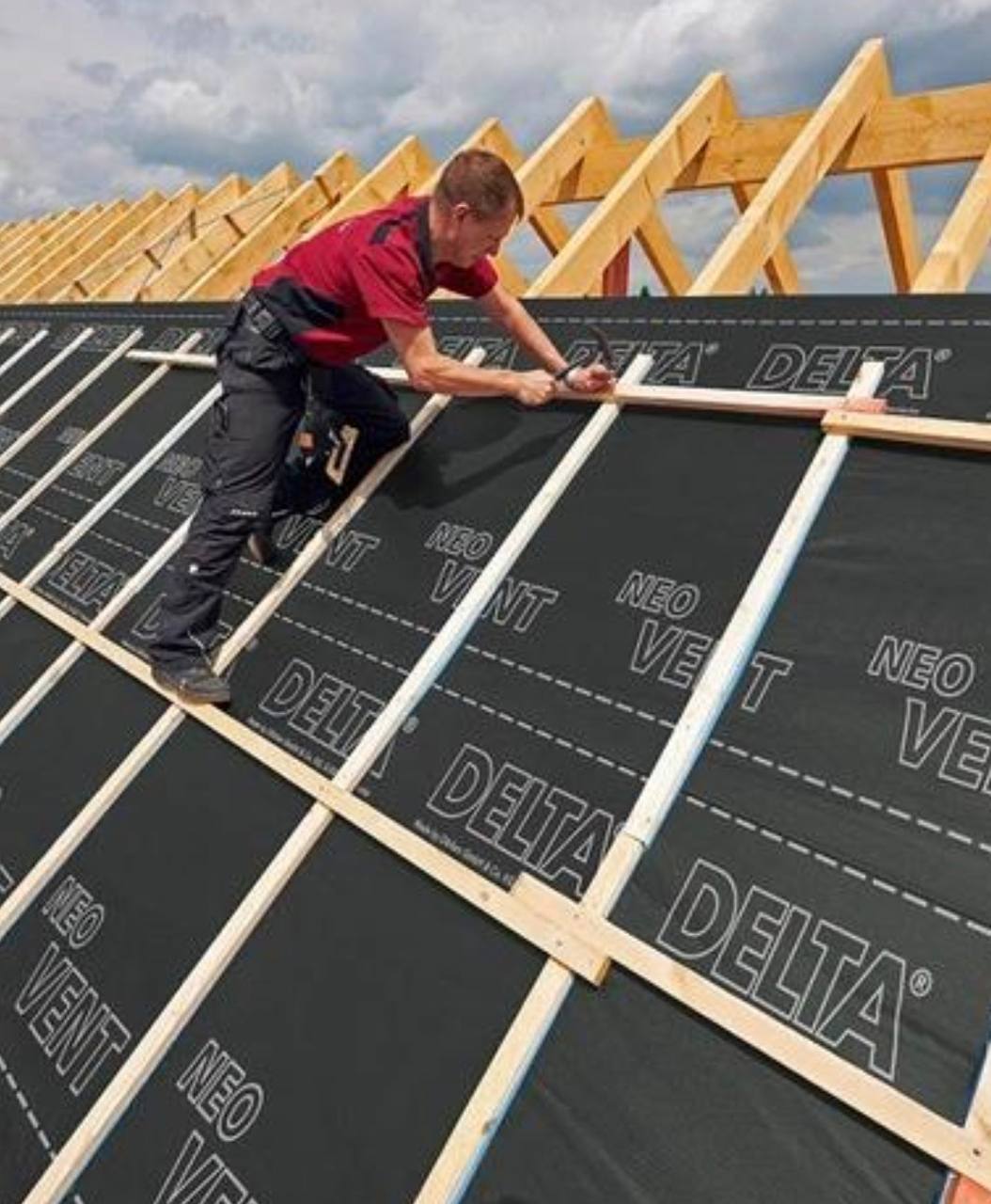
For standard metal roofing installed on battens, a suitable diffusion membrane is used, with counter-battens above it creating a ventilation gap.
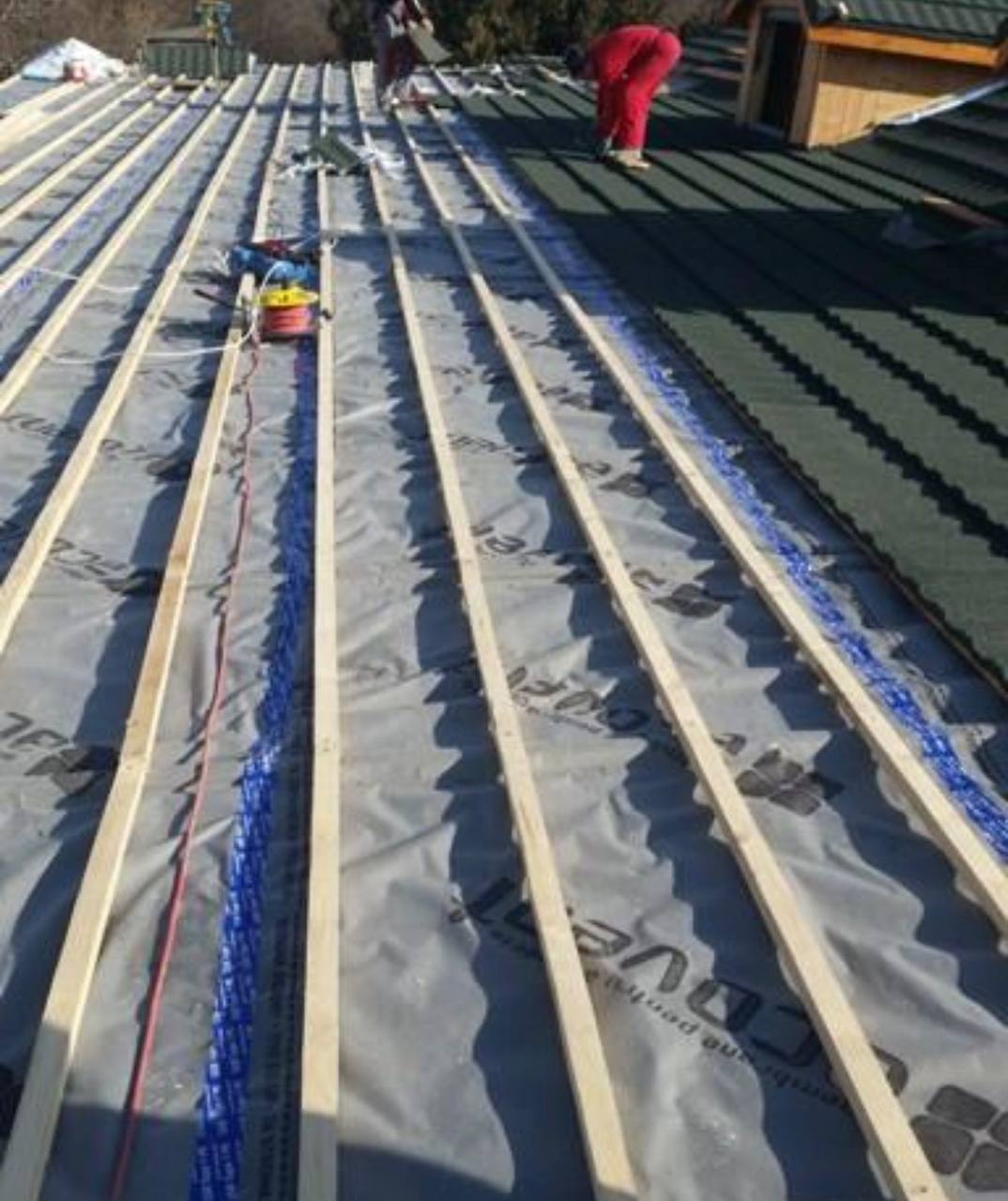
For standing seam metal roofing installed on solid decking, it may be appropriate to use a special diffusion membrane with a drainage and separation layer. It creates a space between the metal and the substrate and helps drain away any condensation.
However, the specific solution must always be selected according to the type of roofing, roof pitch and the entire roof structure.
A diffusion membrane is not a vapour barrier
These two materials are very often confused, although they have different functions.
A vapour barrier is usually located on the inner, warm side of the thermal insulation. Its purpose is to limit the penetration of water vapour from the interior into the structure.
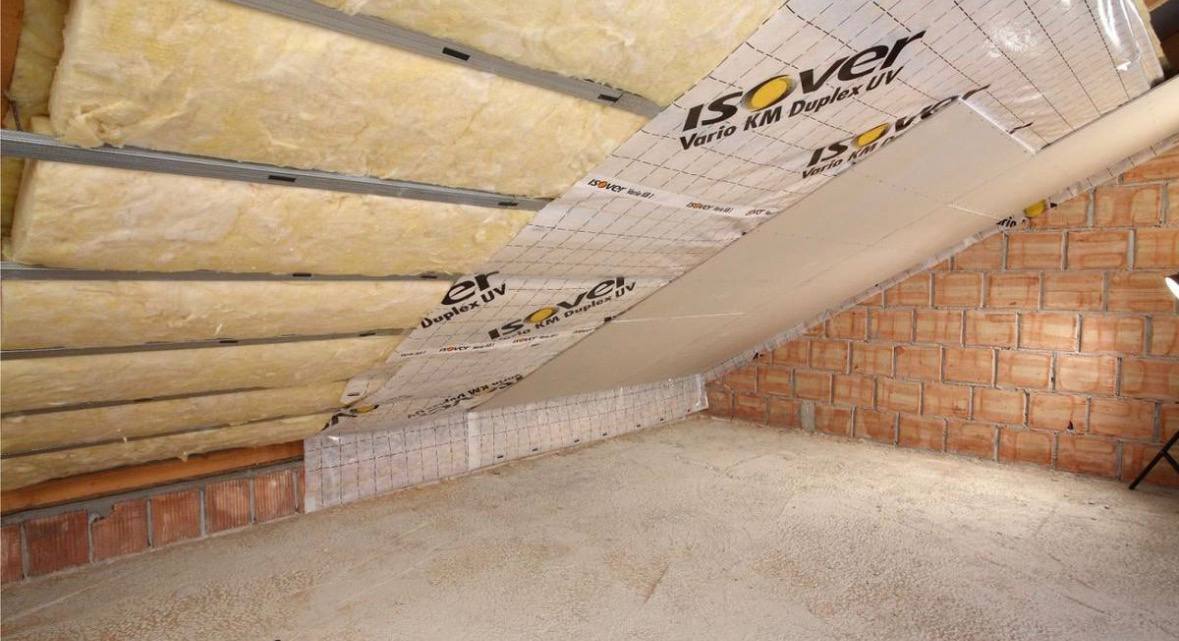
A diffusion membrane, on the other hand, is located on the outside of the structure under the roof covering and allows any moisture from the structure to escape towards the outside.
Simply put:
vapour barrier → limits the entry of water vapour into the structure
diffusion membrane → allows moisture to escape from the structure while protecting it from water from the outside
Both layers therefore have their importance in a correctly designed insulated roof.
What does the Sd value mean?
When choosing a diffusion membrane, you will often come across the Sd value.
The Sd value expresses the equivalent diffusion thickness of an air layer. Simply put, it shows how much resistance a material provides to the passage of water vapour.
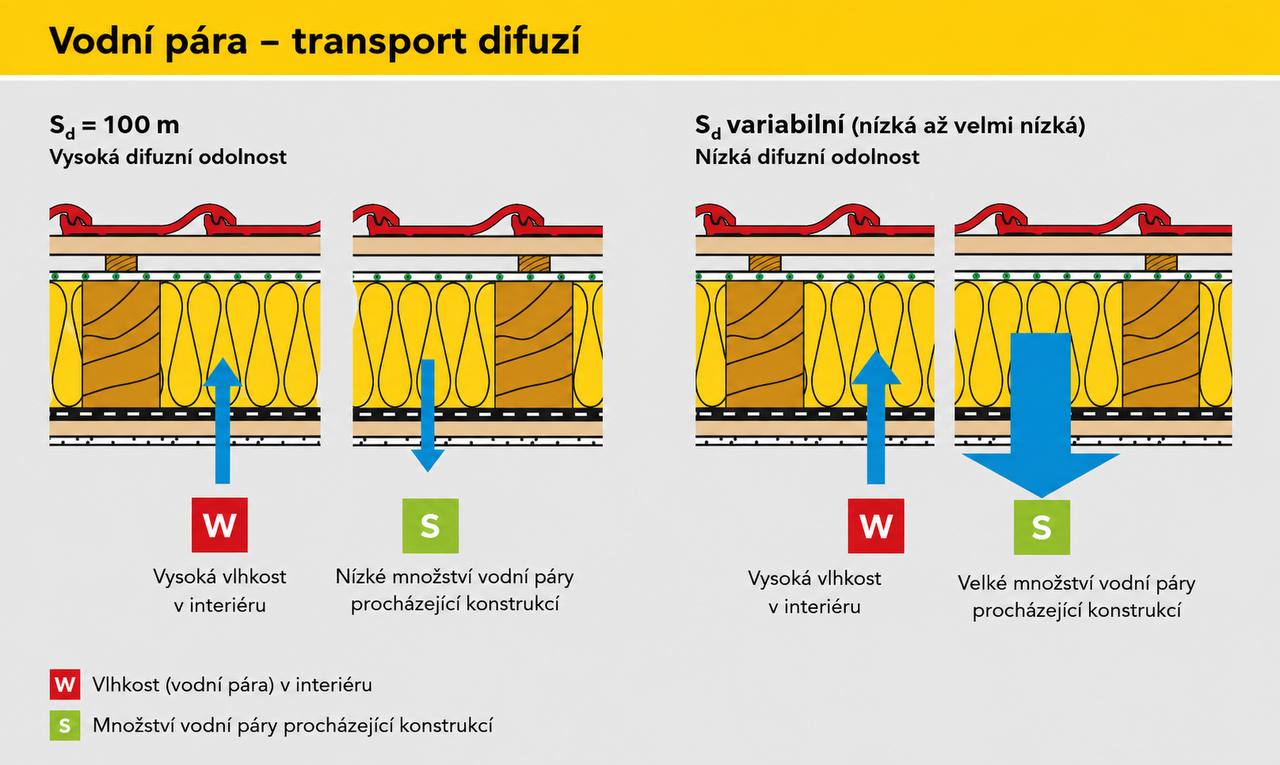
Highly diffusion-open roofing membranes usually have a very low Sd value, for example around 0.02–0.05 m.
The lower the Sd value, the more easily water vapour can pass through the material.
However, when choosing a membrane, it is not advisable to decide based on just one number. Mechanical strength, watertightness, UV resistance, installation method, roof pitch and the required watertightness class of the secondary waterproofing layer are also important.
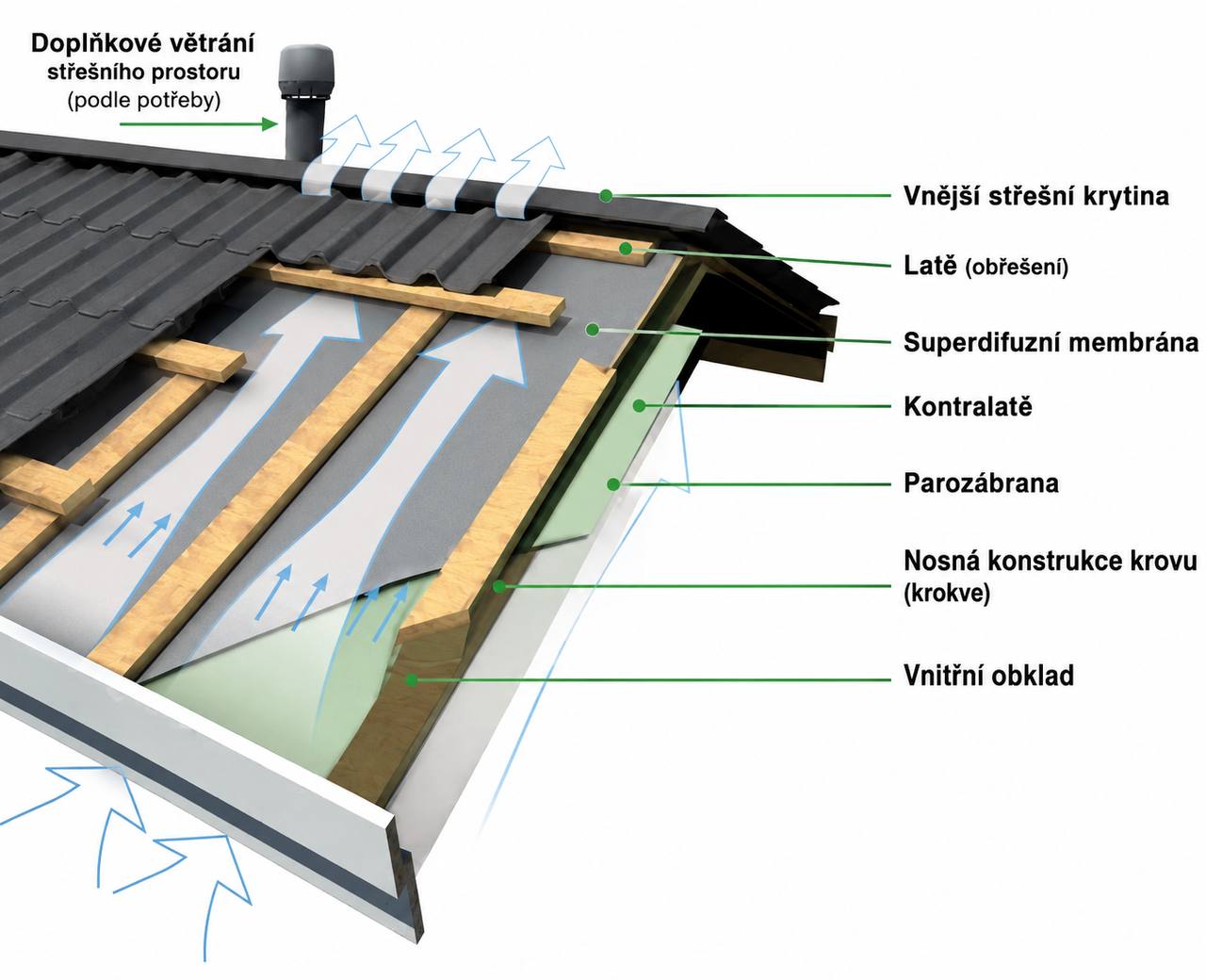
Can a diffusion membrane be installed directly on thermal insulation?
With contact-type highly diffusion-open membranes, yes.
Such a membrane can be installed directly on the thermal insulation without the need to create an additional ventilation gap between the insulation and the membrane.
The ventilation gap is then created above the membrane using counter-battens.
However, the technical requirements of the manufacturer of the specific membrane must always be followed.
The most common mistakes when installing a diffusion membrane
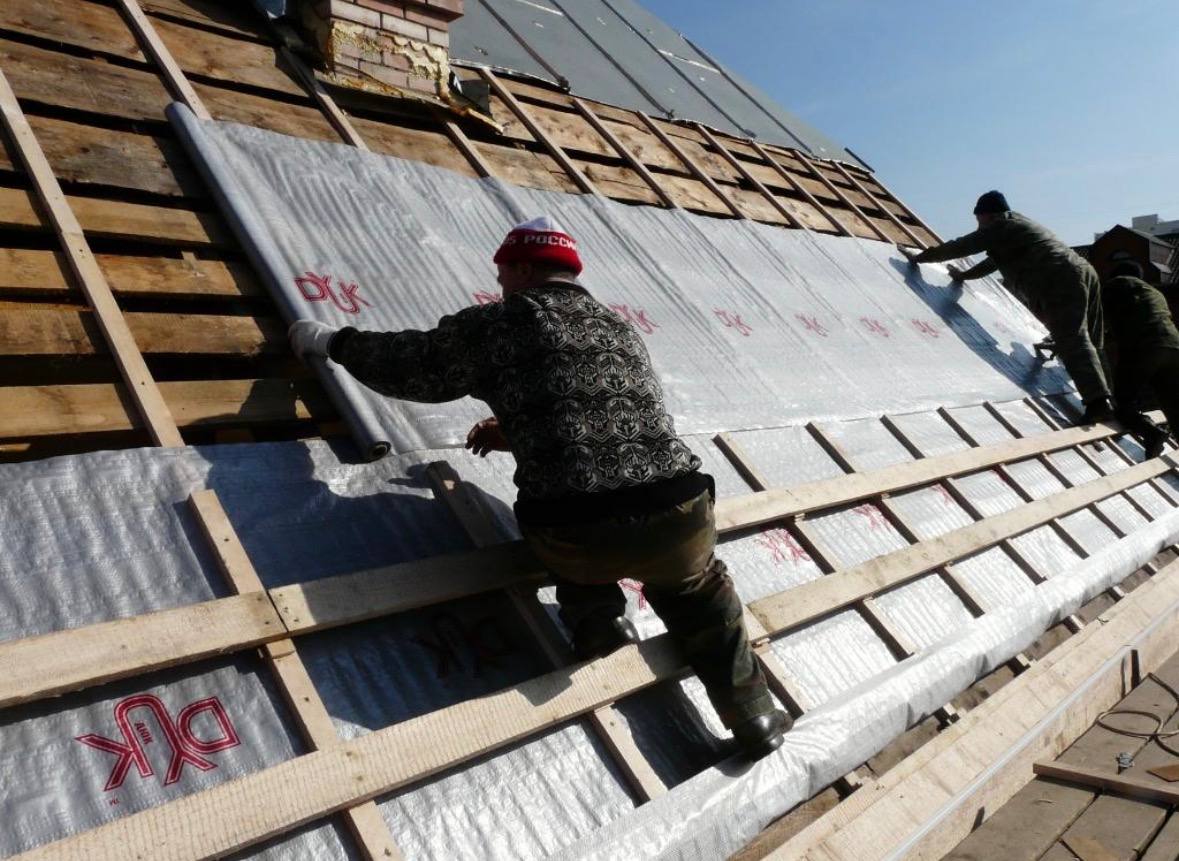
Even a high-quality membrane will not work properly if it is installed incorrectly.
Common mistakes include:
insufficient overlap of individual membrane strips,
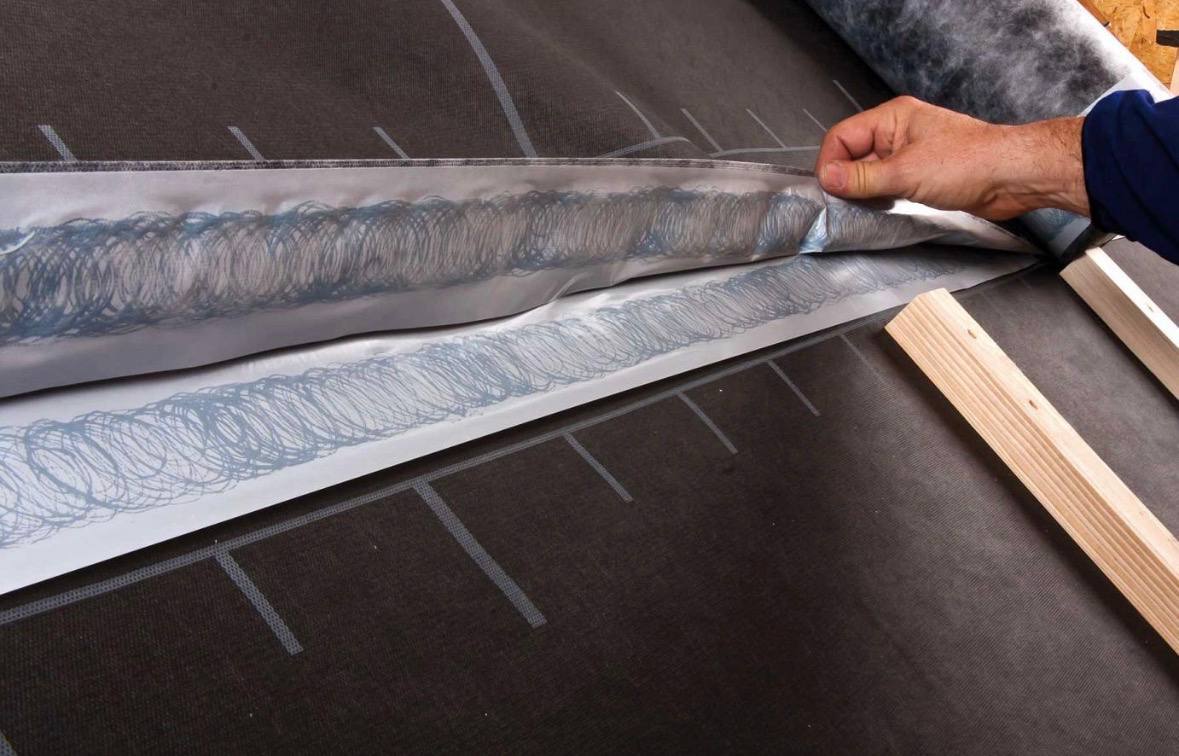
joints that are not taped or are poorly sealed,


